

Court reporters have always needed to be thoughtful about the professionals they trust with their transcripts. But as the court reporting landscape continues to change, knowing how to vet a scopist or proofreader before hiring them has become even more important. You need to know who you’re actually working with—and whether they’re qualified to handle your work.
The online environment has changed, too. Federal Trade Commission data show that reports of job and employment-agency scams nearly tripled from 2020 to 2024, while reported losses grew from $90 million to $501 million.
The last time we wrote about finding, vetting, and hiring scopists and proofreaders was in 2021. Much of that advice still holds. References matter. Experience and training matter. Talking to someone before you hire them matters. Today, however, there are additional ways to make a more informed decision before you hand someone your transcript.
Stenovate offers Identity Verification, displays members’ current country location, provides ratings and reviews from professionals who have worked together, and gives members tools for accountability.
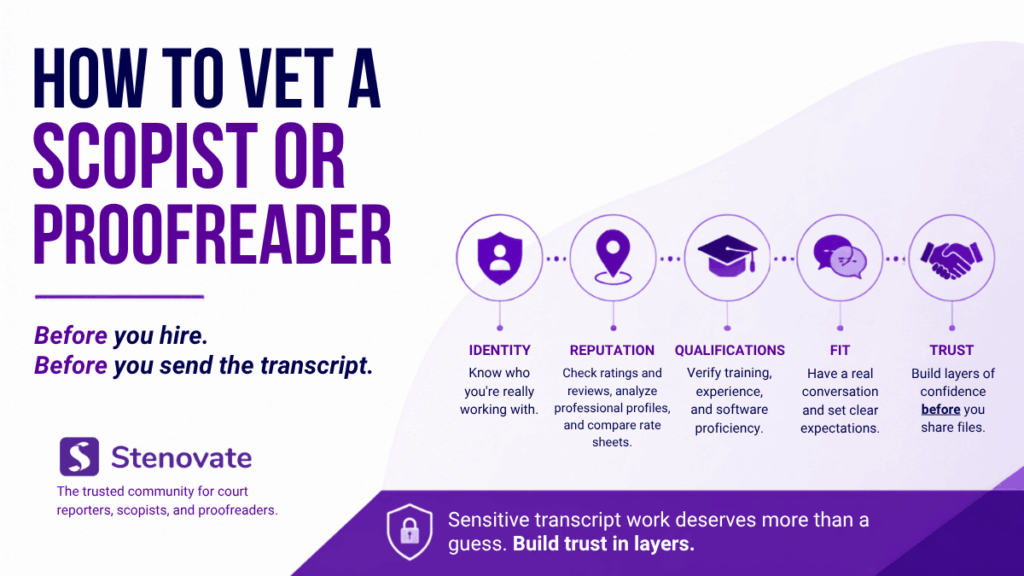
None of those things, by themselves, can tell you whether someone is the right professional for your transcript. Good vetting isn’t about finding one green light. It’s about building layers of confidence before you entrust someone with sensitive transcript work.
Before You Send the File
Once you’ve sent a transcript, audio, exhibits, or other job materials, you’ve already placed trust in the person receiving them. NCRA emphasizes the importance of protecting the confidentiality and security of transcript materials, including when other professionals become involved in transcript production.
That’s why professional vetting should happen before you send the file.
Start With Identity
Before you evaluate someone’s experience, reviews, qualifications, or availability, start with something more fundamental: Do you know who you’re actually working with?
It’s easy to feel confident once you’ve exchanged emails, talked on the phone, or even met someone face-to-face on a video call. At that point, you know there’s a real person on the other end. But you still don’t necessarily know that person is who they say they are. A video call can confirm you’re talking to a real human; it can’t confirm that the identity they’ve given you actually belongs to them.
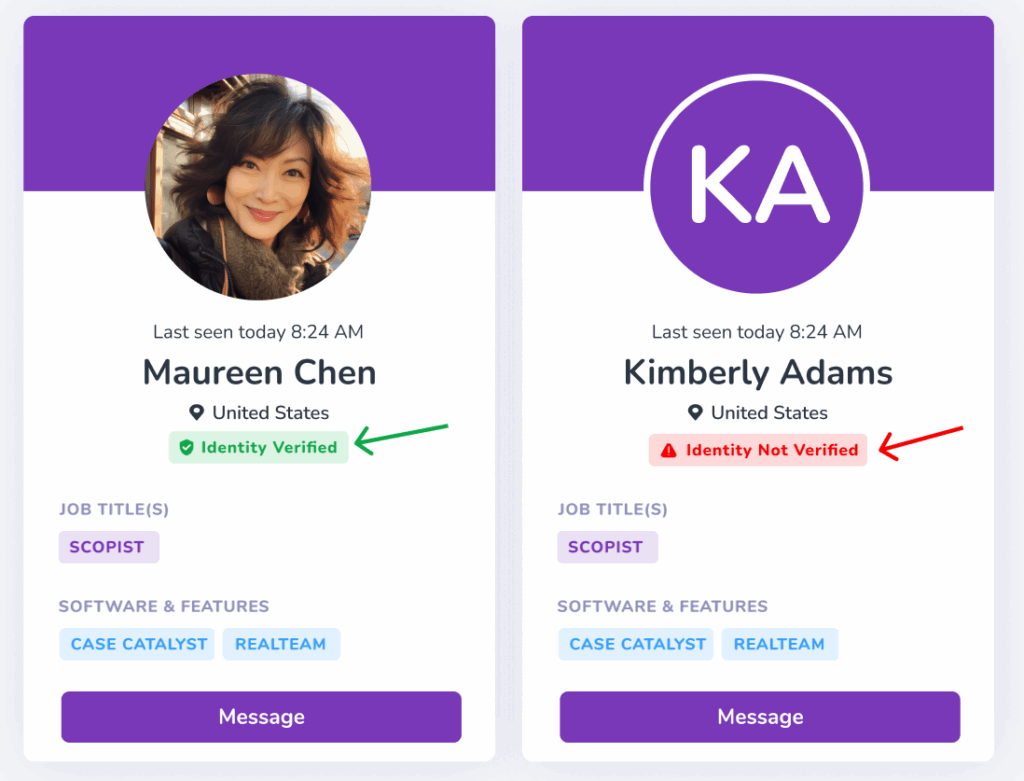
That’s why Stenovate offers Identity Verification through Stripe, a global third-party identity verification provider. When you see the Identity Verified badge on a Stenovate profile, you know that member has completed the identity verification process through Stripe. Sensitive identity documents and information submitted during that process are handled by Stripe rather than stored by Stenovate. Instead of relying solely on a profile, an email address, a conversation, or someone’s word, you’re starting with an identity that has been independently verified.
Identity Verification doesn’t tell you whether someone is an excellent scopist or proofreader—and it isn’t intended to. Identity and competency are two different questions. First establish who you’re dealing with. Then evaluate their professional history, qualifications, communication, and fit for your work.
Verified identity also gives everything that follows a stronger foundation. Ratings, reviews, and professional accountability are more meaningful when they’re connected to the person who actually earned them.
Know who you’re potentially working with.
Know Where They’re Working From
Stenovate displays a member’s current country location on their profile, giving you visibility into the country they’re currently accessing Stenovate from. This is not necessarily the member’s country of citizenship or permanent residence.
Why does that matter? Some transcripts may have requirements that restrict a reporter from sending transcript work to a scopist or proofreader located outside the United States. Those requirements may come from a client, an agency, a contract, or a jurisdiction.
If your assignment has those restrictions, knowing where the person you’re considering hiring is currently located helps you make an informed decision before sending the work.
But don’t confuse location with qualification. Being located in the United States doesn’t make someone a qualified scopist or proofreader, and being located elsewhere doesn’t make someone unqualified.
Location is one piece of information that may matter to your decision, but it isn’t a measure of someone’s ability. Once you’ve confirmed that a professional meets any location requirements for your assignment, the next question is what kind of track record they’ve built with the people they’ve worked with.
Look at Their Ratings and Reviews
One of the most useful things you can learn before hiring someone is what happened when other professionals hired them. Stenovate’s ratings and reviews give you a visible history of feedback from members who have actually worked together. And unlike traditional references, those reviewers weren’t selected by the person you’re considering hiring.
A strong history of positive reviews should carry real weight in your decision. If multiple reporters consistently describe excellent work, dependable turnaround, good communication, and a professional relationship they’d happily continue, that’s meaningful evidence of an established track record.
And if you want more context, you aren’t limited to reading the review. Stenovate lets you message the reviewer directly. You probably don’t need to investigate every glowing review, but if you have a question or something gives you pause, you can ask someone who has actually worked with that person about their experience.
No reviews is not a red flag. An experienced scopist or proofreader may simply be new to Stenovate. It only means this particular layer of professional history isn’t available yet. In that case, you’ll need to rely more heavily on the other information you can verify.
Likewise, one negative review doesn’t necessarily tell the whole story. Consider what the reviewer actually said, how it compares with the member’s overall history, and whether you need more context before making your decision. Reviews are information to evaluate, not a verdict to blindly follow.
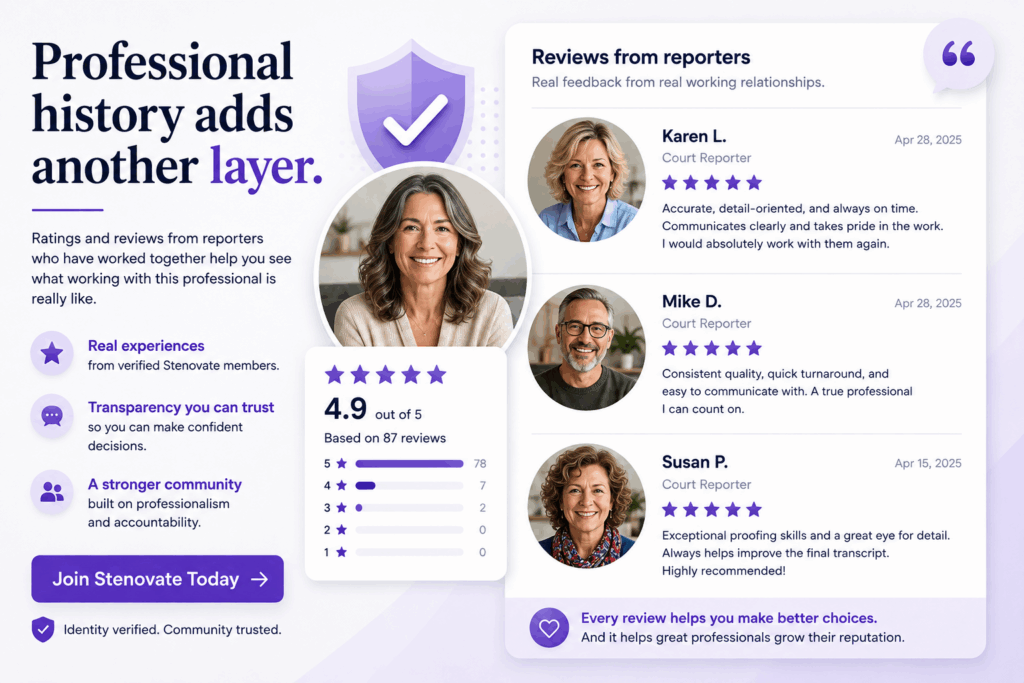
See real ratings and reviews from professionals who have worked together on Stenovate. Profiles and reviews pictured above are for illustration only.
Use References When You Need Them
Traditional references can still be useful, particularly when someone is new to Stenovate and doesn’t yet have an established review history. If you ask for references, make sure you can verify that the person you’re talking to is actually the reporter they claim to be. If they’re Identity Verified on Stenovate, that part is easy.
From there, ask about the work itself. What kind of assignments did they handle together? How was the quality of the work? Did they communicate well and meet deadlines? Would the reporter hire them again?
Remember, too, that traditional references are typically selected by the person you’re considering hiring. They’re valuable, but they’re just one perspective and another piece of the overall picture.
If someone already has a strong history of reviews from Stenovate members, you may have all the professional feedback you need. If they don’t, references can help you understand what it has actually been like to work with them. Either way, the next question is whether their qualifications match the work you need done.
How to Vet a Scopist or Proofreader’s Qualifications
Knowing how to vet a scopist or proofreader requires separating identity from professional qualifications. Identity tells you who someone is. Now you need to determine whether their experience actually matches the work you need done.
For a scopist, start with training, experience, and CAT proficiency. How long have they been scoping? What training have they completed? Which CAT software do they actually use? Can they read steno notes well enough to make correct J-defines and globals? Are they comfortable recognizing mistranslates, researching unfamiliar terminology, using audio appropriately, and working with a reporter’s dictionary rather than simply editing whatever English appears on the screen?
If you’re a scopist and terms like J-defines, globals, mistranslates, steno notes, and reporter dictionaries are unfamiliar to you, that’s worth paying attention to. Scoping is more than editing a legal document. Our article Scoping vs. Transcription: Do You Know the Difference? explains the difference between scoping a court reporter’s CAT file and transcribing recorded legal audio—and why that distinction matters.
For both scopists and proofreaders, ask about transcript-specific punctuation and grammar. Which resources do they know and use? Are they familiar with Morson’s English Guide for Court Reporters, Margie Wakeman Wells’ Court Reporting: Bad Grammar/Good Punctuation, or The Gregg Reference Manual? More importantly, can they adapt to your preferences when your style differs from the resource they normally follow?
For a proofreader, strong general grammar skills are valuable, but transcript proofreading is its own kind of work. Look for experience with actual court-reporting transcripts, spoken English, Q&A, colloquy, transcript-specific punctuation, and the kinds of errors that occur in a verbatim record.
Finally, don’t treat a list of qualifications as proof by itself. Someone can list Case CATalyst, Eclipse, Morson’s, or Margie on a profile. You’re not looking for the right answers to a quiz; you’re looking for evidence that this person actually does the work they say they do.
Have a Real Conversation
If the other trust signals are strong—verified identity, established ratings and reviews, clear qualifications, and any relevant location information—you may already have what you need to make a decision.
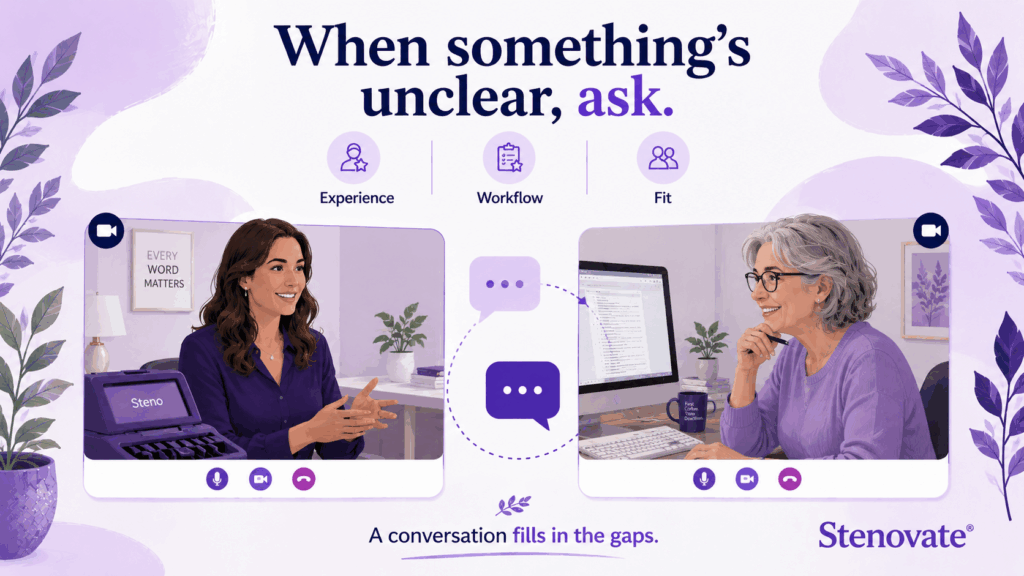
When those signals are incomplete or leave you with questions, talk to the person. A phone or video conversation can help you learn more about their experience, knowledge, communication style, and familiarity with the kind of work you need done.
You don’t need to conduct a formal interview. Talk about the work, ask the questions that haven’t already been answered, and pay attention to whether their answers line up with what you’ve learned so far.
A good conversation can fill in gaps. It shouldn’t replace the other trust signals you’ve gathered.
Let the Work Tell You
Use a short test or representative sample before committing to a substantial assignment. This can be part of a real job. If you have a 400-page transcript, for example, you might start by sending Pages 1–30, review the work, and then send another section before turning over the rest of the file.
The important thing is to test the working relationship before the stakes are high. Don’t try someone for the first time on an expedite, realtime assignment, daily copy, or another job where you don’t have room to adjust if the fit isn’t right.
Pay attention to accuracy, judgment, attention to detail, ability to follow your preferences, and how the person handles questions or unfamiliar material.
A résumé can tell you about experience, references can tell you what others experienced, and a conversation can tell you how someone communicates. Ultimately, demonstrated work gives you another important piece of the picture.
Build Your Trusted Network
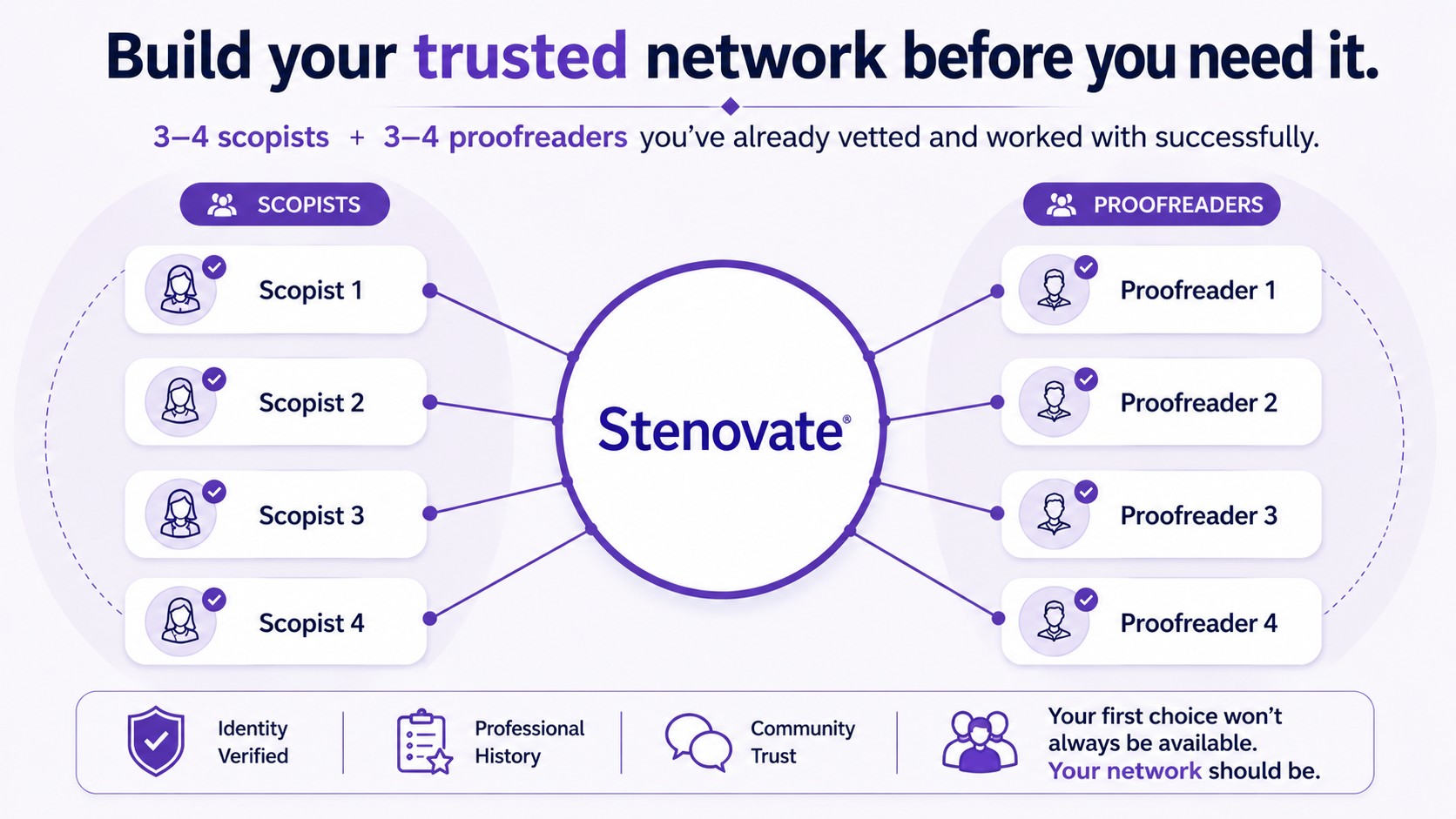
Finding one great scopist or proofreader is a win, but don’t stop there. Build a network of professionals you’ve already vetted and know you can trust with your work.
Stenovate recommends developing relationships with three or four scopists and three or four proofreaders you’ve worked with successfully. Keep your own preferred order, too, so you know exactly who you’ll reach out to first, second, third, and fourth when you need help.
Your first choice won’t always be available. Building those relationships before you urgently need them means you aren’t starting the vetting process from scratch when a deadline is already looming.
Remember: They’re Vetting You, Too
Scopists and proofreaders aren’t the only professionals who need to show up well in a new working relationship. If you’re asking another professional to verify their identity, verify yours, too. Trust goes both ways, and scopists and proofreaders should know who they’re accepting sensitive transcript work from just as reporters should know who they’re sending it to.
That matters even more as court reporter impersonation scams become a concern in online court reporting communities. A scopist may be able to confirm that a court reporter is a real professional without actually confirming that the person contacting them is that reporter. Identity verification helps close that gap.
Be honest about the work you’re asking someone to accept. If your translation quality is rough, the audio is difficult, the subject matter is highly technical, the speakers are challenging, or the turnaround is demanding, say so. Set accurate expectations and be willing to pay appropriately for the difficulty and turnaround you’re asking someone else to take on.
Hold yourself to the same professional standard you expect from the people you hire. Communicate well. Answer questions. Pay on time. Respect the other person’s time and expertise. Keep improving your writing, dictionary, translation quality, and reporting skills.
Every reporter wants a rockstar scopist. But rockstar scopists are looking for rockstar reporters, too.
Great talent attracts great talent.
There Is No Single Green Light
When learning how to vet a scopist, it’s tempting to look for one thing that tells you someone is safe to hire. There isn’t one.
Identity Verification tells you identity, not skill. Location tells you where someone is working, not whether they’re qualified. Reviews tell you about previous working relationships, not what your experience is guaranteed to be. References and conversations can fill in gaps. Ultimately, a test run lets you see how someone actually works with you.
That’s the point of the layers. Stenovate doesn’t make the hiring decision for you. Instead, it gives you more information, identity safeguards, professional history, communication tools, and accountability so you can make a better-informed decision yourself.
After the Job, Leave the Review
If someone did great work for you, leave the review.
It doesn’t need to be long. Was the work accurate and returned on time? How was the communication? Would you work with that person again? Say so.
If another reporter’s review helped you make a decision about someone, your review can do the same for the next reporter. It also helps excellent scopists and proofreaders build a visible professional reputation based on actual working relationships.
This is especially important for experienced professionals who are new to Stenovate. Everyone starts with no reviews on the platform. Thoughtful feedback helps build the professional history that makes ratings and reviews more useful to the entire community.
Reviews create reputation.
When Something’s Wrong, Tell Us
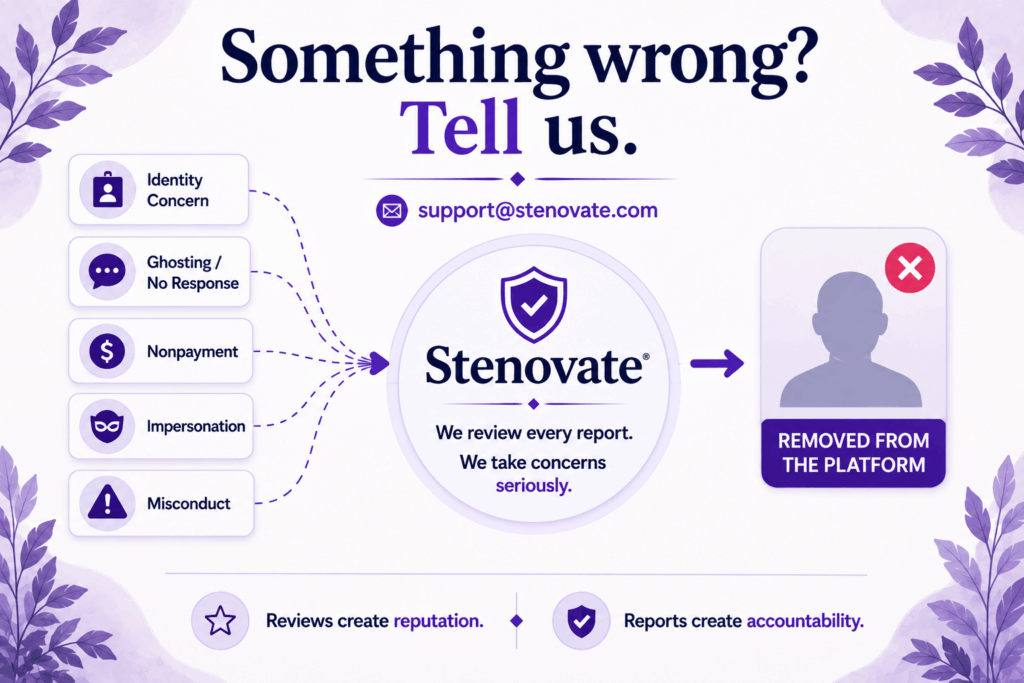
Some situations need more than a rating. If you have a serious concern about identity, dishonesty, impersonation, misconduct, account integrity, or any other significant issue, tell Stenovate. Don’t assume that leaving a review means we know something requires our attention.
Stenovate reviews member reports and may take action when warranted, including removal from the platform. Reporting serious concerns helps us protect the integrity of the community and gives Stenovate the opportunity to address problems that may extend beyond a single working relationship. Stenovate watches for patterns, flags, and even removes individuals when warranted.
Reviews create reputation. Reports create accountability.
Trust Shouldn’t Be a Guess
Learning how to vet a scopist or proofreader doesn’t mean finding one credential, review, or conversation that guarantees a perfect working relationship. It means gathering enough reliable information to make an informed decision before sensitive transcript work changes hands.
Know who you’re working with. Check any location requirements for your assignment. Look at professional history. Verify qualifications and references when needed. Fill in unanswered questions with a conversation. Then let the work confirm what you’ve learned.
Once you’ve found professionals you work well with, build those relationships—and build more than one. The goal isn’t to find someone once. It’s to develop a network of professionals you already know you can turn to when you need them.
And after you’ve worked together, contribute what you learned back to the community.
Trust shouldn’t be a guess. It should be built in layers.
